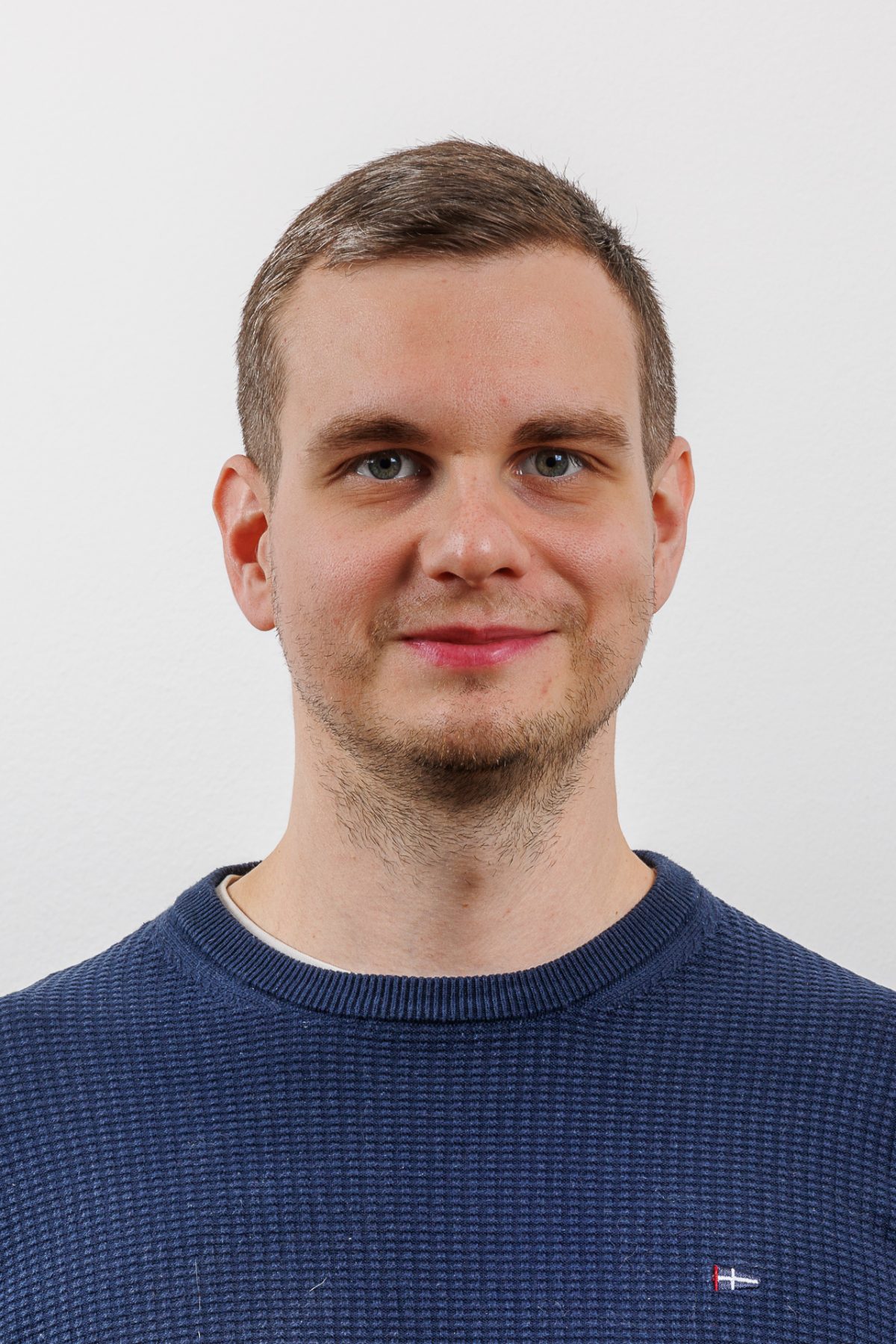
Dr. Jaka Vodeb
Dr. Jaka Vodeb is a Research Associate at the Department of Complex Matter, Jožef Stefan Institute. His research focuses on quantum simulation of non-equilibrium many-body phenomena on programmable quantum hardware, with particular emphasis on quantum annealers, neutral-atom and Rydberg platforms, and strongly correlated quantum matter. His work spans quantum simulation, many-body dynamics, quantum materials, symmetry breaking, metastability, and false vacuum decay.
His recent research has focused on using currently available quantum devices to study physically meaningful many-body problems that are difficult to access with standard classical methods. This includes non-equilibrium dynamics in quantum materials, false vacuum decay in transverse-field Ising systems, and symmetry-breaking dynamics across quantum phase transitions. His work combines theoretical modelling, numerical emulation, and experimental quantum simulation.
A central emerging research direction is the quantum simulation of correlated quantum matter across multiple programmable platforms. This includes the development of minimal theoretical models for interacting spin and electronic systems, with particular focus on non-equilibrium many-body dynamics, metastable states, and electronic domain structures relevant to real materials such as 1T-TaS₂. A related open PhD topic is already available on the department website.
In parallel, he is also developing a research direction in quantum optimization, focusing on the benchmarking and practical use of quantum, classical, and hybrid solvers for hard combinatorial optimization problems such as Max-Cut and QUBO. In recent work, he and collaborators evaluated D-Wave quantum and hybrid solvers against classical simulated annealing and Toshiba’s simulated bifurcation machine across benchmark instances ranging from 100 to 10,000 nodes. He is open to supervising postdoctoral or PhD research in this area as well.
Research interests
- Quantum simulation of non-equilibrium phenomena on quantum devices
- Strongly correlated quantum matter and quantum materials
- Quantum annealers and neutral-atom / Rydberg platforms
- False vacuum decay and metastable many-body dynamics
- Symmetry breaking, Kibble-Zurek physics, and quantum phase transitions
- Quantum optimization, Max-Cut, and QUBO benchmarking on quantum and hybrid platforms
Funded projects
Quantum Simulation of Non-equilibrium Phenomena on Quantum Devices (J1-70063)
ARIS fundamental research project focused on false vacuum decay, correlated quantum matter, and symmetry-breaking dynamics on programmable quantum devices.
QBIQ – Quantum solver for hard Binary Quadratic problems (L1-60136)
Project on quantum and hybrid quantum-classical methods for hard binary optimization problems, including QUBO/QBO-type formulations and solver development.
Physics of Quantum Technologies (P1-0416)
National research programme in quantum technologies, including quantum simulation, quantum hardware, and broader activities in the Slovenian quantum ecosystem.
SQUASH – Slovenian Quantum Science Hub
Quantum-science training and recruitment framework, relevant for postdoctoral mentoring and future collaboration.
Selected highlights
- First-author work on quantum simulation of false vacuum dynamics and non-equilibrium quantum matter on quantum annealers.
- Recent work in quantum optimization benchmarking quantum, classical, and hybrid solvers for Max-Cut and QUBO problems.
- Research at the interface of condensed-matter physics, programmable quantum devices, and optimization-oriented quantum computing.
Opportunities for students and postdocs
Prospective BSc, MSc, PhD students, postdoctoral researchers, and collaborators are welcome to check open positions or topics for MSc and BSc theses
Quantum simulation of correlated quantum matter
Programmable quantum platforms for studying non-equilibrium many-body dynamics in strongly correlated systems and quantum materials.
Full PhD topic available here:
Quantum Simulation of Correlated Quantum Matter
Quantum optimization
Research opportunities in benchmarking and developing quantum, classical, and hybrid approaches to hard optimization problems, including Max-Cut, QUBO, and related formulations on annealing and hybrid platforms. This direction is supported by recent benchmarking work on solver quality and performance.
Interested candidates can contact jaka.vodeb@ijs.si.
Teaching
I contribute to teaching in quantum computing and related topics.
Quantum Computing Module
Undergraduate module (1 ECTS) introducing the foundations of quantum information and quantum computation.