JOŽEF STEFAN INSTITUTE
Department of Complex Matter
Jamova cesta 39, 1000 Ljubljana, Slovenia

Dynamics of Quantum matter

We explore non-equilibrium many-body dynamics in quantum systems that experience symmetry-breaking, topological, or jamming transitions. These systems encompass superconductors, charge-density wave, and magnetic materials.

Experimental Soft Matter Physics

The research is conducted within the “Light and Matter” research program. The interaction of light with matter is one of the most important fields of physics and optical processes are indispensable in many branches of modern industry.

For students

Are you searching for an exciting and innovative topic for your seminar, summer work, or perhaps for a Masters or Diploma research? Check available topics an start your research journey with us.

Job opportunities

We are searching for talents! If you are searching for PhD position, if you are a motivated postdoc or senior researchers, check open positions and proposed research topics.

Our partners

We strongly believe that collaboration helps provide opportunities. We collaborate with other research institutions, businesses and industry. Learn here about our associates and how to become our partner.

May 12, 2026, 15:00, Physics Seminar Room
Speaker: Rok Rutar, Department of Theoretical Physics, Jožef Stefan Institute, Slovenia
In this project, we examine the transport and optical properties of weakly doped Wigner crystals. For concreteness, we restrict ourselves to an effective two-dimensional tight-binding model on a triangular lattice with ...
Home / Dynamics of Quantum Matter / Quantum computing

Quantum computing

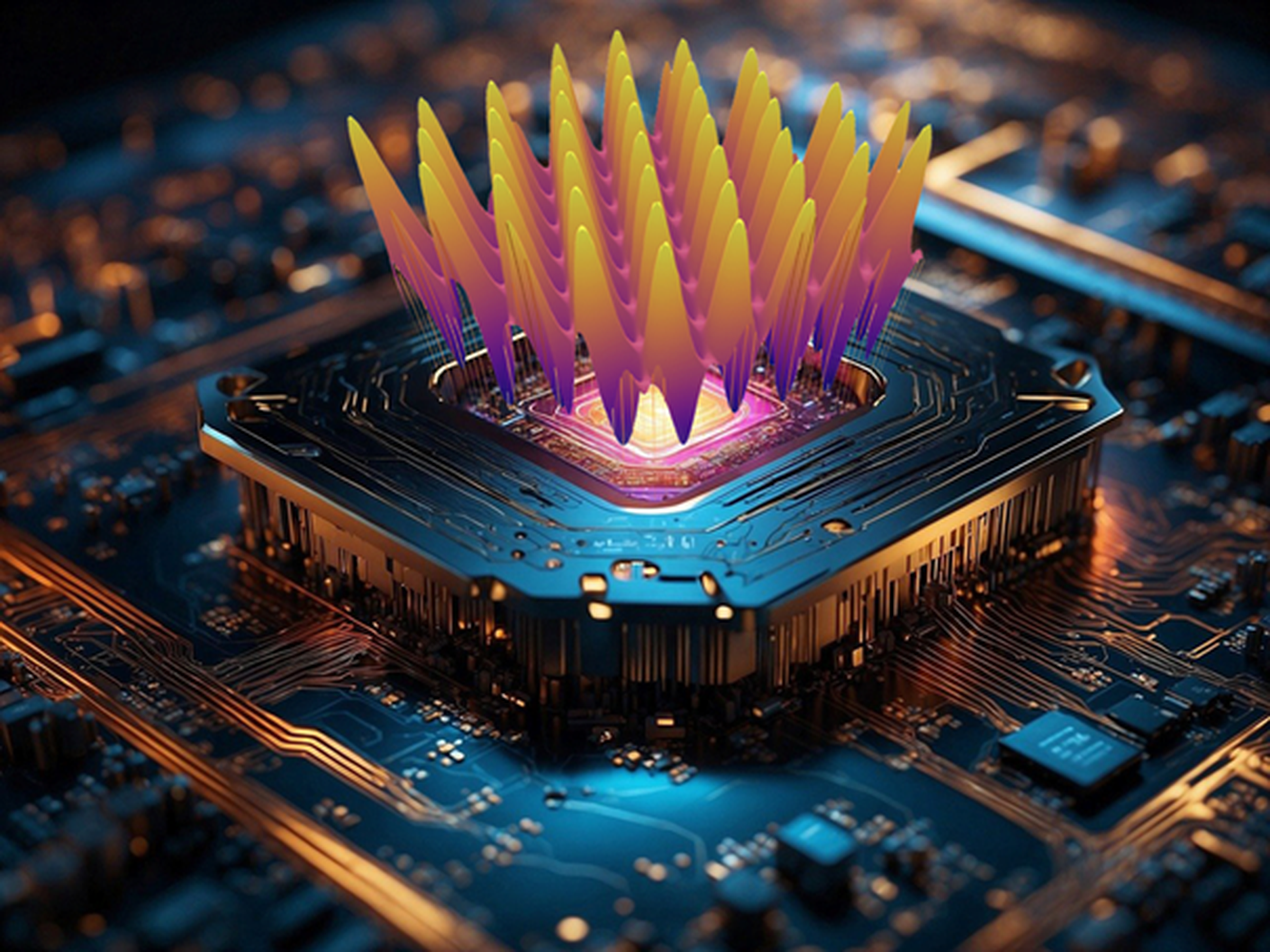
We investigate quantum computing across several complementary directions, ranging from the physics of superconducting and hybrid quantum devices to the use of programmable quantum processors for simulation and optimization. Experimental work focuses on superconducting qubits, resonators, and hybrid structures, with particular emphasis on materials properties and loss mechanisms. In parallel, we study how current noisy quantum devices can be used for quantum simulation of many-body physical processes and for solving hard optimization problems using quantum and hybrid quantum-classical methods.
Some of our articles on the topic:

  1. Brence, J. et al. Boosting the performance of quantum annealers using machine learning. Quantum Machine Intelligence 5, 4 (2023).
  2. Vodeb, J. et al. Non-equilibrium quantum domain reconfiguration dynamics in a two-dimensional electronic crystal and a quantum annealer. Nature Communications 15, 4836 (2024).
  3. Vodeb, J. et al. Stirring the false vacuum via interacting quantized bubbles on a 5564-qubit quantum annealer. Nature Physics (2025).